Blogs

Samsung Brings Game Developers and Tizen Together at GDC 2016

The Game Developers Conference, being held this year from March 14 to 18 in San Francisco, is the world’s largest annual event in the gaming industry. With some 26,000 gaming professionals on hand, GDC is the hot-bed for all the latest trends, experiments and innovations in gaming—and Samsung is there, too.

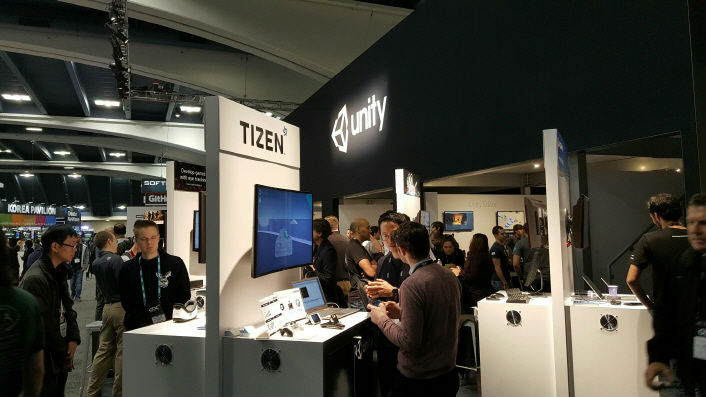
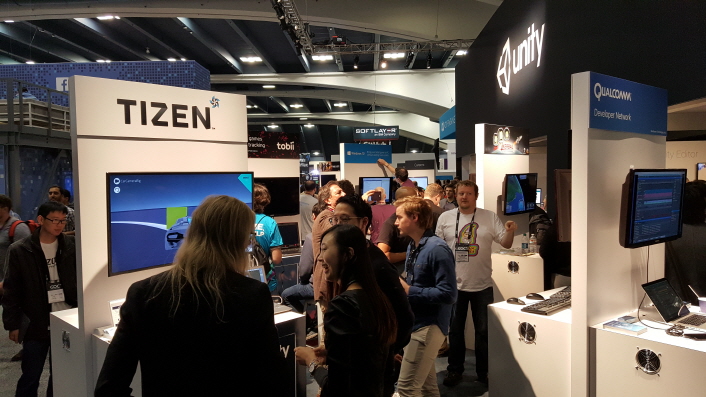
This year, Samsung Electronics—in cooperation with Unity—is presenting an important development, bringing the popular and powerful Unity 3D game engine to Tizen. Visitors to the exhibition were able to try out Tizen Unity demo for the Z1 and Z3 smartphones, as well as for Samsung Smart TV.

Through this powerful new tool, developers will be better able to create engaging, innovative games for the latest Tizen-powered devices.

Check out these photos of the Unity 3D game engine for Tizen in use at GDC 2016.
1_GDC

2_GDC
Samsung staff demonstrates the benefits of the Unity engine for app development on Tizen platform at GDC 2016.

Tizen 2.4 SDK release

We are pleased to announce that Tizen 2.4 SDK is now available including support of Tizen 2015 UX (new winset and style) and over 3,000 new APIs.

Tizen 2.4 SDK is now available on the SDK download page.


Highlights of this release include, among other improvements:

  • Tizen 2015 UX

Tizen 2.3.1 Source Code Release

BY Technical Steering Group, 22 Sep 2015

We are pleased to announce that Tizen 2.3.1 source code is now available including support for the circular type wearable profile. Developers and manufactures may utilize Tizen to their wearable devices based on this source code.


Highlights of this release include, among other improvements:

  • Support web & native UI framework for wearable devices with a circular screen
  • Custom event for the notifications on detected rotary detents
  • Wearable native APIs for wearable native applications

Tizen 3.0 Milestones Source Code Release

We are pleased to announce Tizen 3.0 first milestone release for TV and Mobile profiles.

This milestone provides developers with Tizen kernel, device drivers, middleware subsystems, and Web/Native APIs, necessary to develop future Tizen compliant solutions and marks feature completion for the key features of Tizen 3.0 TV and Mobile profiles.


Key features integrated in this milestone include:

  • 2.4 public API (both Native API and Web API) is backward-compatible with 3.0 TV and Mobile profiles.
  • 64bit SoC is tested and verified with 3.0 TV and Mobile profiles.
  • 3.0 TV and Mobile profiles support multi-user architecture for multi-user/single-login usage.

Tizen 2.3.1 SDK release

We are pleased to announce that Tizen 2.3.1 SDK is now available including support for the circular type wearable profile.

Tizen 2.3.1 SDK is now available on the SDK download page.


Highlights of this release include, among other improvements:

  • Support web & native UI framework for wearable devices with a circular screen
  • Custom event for the notifications on detected rotary detents
  • Wearable native APIs for wearable native applications

Tizen 2.3 Rev3 SDK release

A new release of Tizen 2.3 SDK (Rev3) is now available with a bug fix in tpk compression tool.

Please refer to the SDK download page and the release notes of Tizen 2.3 SDK for more details.


Fixed Bugs

  • Native IDE
    • The compression library issue making the tpk size too big due to the defective compression has been fixed.
    • Invalid file permission issue when unzip the tpk has been fixed. This issue can cause the application is rejected due to signing failure from Tizen seller site.

Tizen @ MWC: The IoT is growing, and so is Tizen

Tizen and its partners attended MWC 2015 in Barcelona, where we showcased the latest innovations in connected devices and apps. Attendees who stopped by Tizen booth were able to get their hands on several Tizen devices including the Samsung Z1 and the Samsung Gear S, while our partners demonstrated their various technologies built on Tizen.

MWC has grown dramatically, and much of that growth has to do with a broadened appeal, stretching the imagination and the innovation that envelops “mobile”. To tap into all of the unique perspectives and viewpoints at the show, we conducted a survey of more than 300 attendees, asking questions about their preferences in mobile handsets, operating systems and connected devices. What we learned falls right in line with our views on the future of the Internet of Things (IoT) and Tizen.

But first… some interesting takes on the deciding factors in device choice. With many exhibitors launching new mobile devices at the show, it was extremely relevant to ask people what their top priority was when choosing a new mobile device. The answer? Respondents seemed to favor usability above all else, with 65% deeming it the most important feature. Quality of the camera was a distant second at 11%. Power consumption and breadth of available apps were slightly less dominant at 10% and 9% respectively.

So what does this mean for Tizen? Today’s mobile phone buyers are primarily interested in a smartphone that is user-friendly, customizable and convenient. Vendors should continue offering devices with more personalized experiences that take user preferences and context into account, allowing consumers to quickly complete everyday tasks with just a few taps and finger swipes.

This strong demand for usability in mobile devices is inevitably linked to the device’s OS, and 66% of our respondents confirmed this assumption by pointing to a device’s operating system as very important when deciding whether to buy a device or not. With usability increasingly becoming more a product of software than hardware, Tizen community is intent on developing a flexible and efficient operating system that can adapt to a wide variety of connected devices. Tizen can deliver a high level of usability across devices thanks to its lightweight and open source nature, providing a high level of customization through comprehensive access to common open source libraries. From a device maker’s perspective, having the ability to create custom user experiences is a huge opportunity to finding that consumer sweet spot while still maintaining differentiation.

As the borders of mobility expand, there’s more and more talk about IoT, with close to 90% of survey respondents deemed cross-device communication as important, and nearly half said it was very important. To top it off, 76% of the respondents answered that they expected to use 3 or more connected devices outside of their smartphones in the next two years. Connected devices and the inter-connectivity between them will undoubtedly be vital in the coming years, and establishing a unified platform for these devices is more important now than ever.

Tizen 2.3 Rev2 SDK release

We are pleased to announce the availability of Tizen 2.3 Rev2 SDK.

Tizen 2.3 Rev2 SDK is now available via the SDK download page.

Highlights of this release include, among other improvements:

  • Native UI Builder
    • WYSIWYG Editor with support for multiple views (Properties, Navigation, Outline, Resources).
    • qHD(540X960) resolution support for Emulator, Web simulator, Native UI Builder, Web UI Builder.

Tizen 2.3 Source Code Release

We are pleased to announce Tizen 2.3 source code release which now includes support for the wearable profile. Developers and manufactures may utilize Tizen to their wearable devices based on this source code.

Highlights of this release include, among other improvements:

  • Support for mobile and wearable profiles.
  • New and improved Native framework which provides fast, highly scalable and themeable graphics. 
  • Extensive Web and Native API improvements.

Tizen IVI 3.0 released

The IVI team is excited to announce the availability of Tizen IVI 3.0 for In-Vehicle Infotainment. Tizen IVI 3.0 is a Linux-based open source operating system and Tizen profile widely accepted by the automotive industry. It bundles popular and well supported open source projects where suitable and new industry-specific components where no solutions existed. This makes it the most advanced open source distribution available for automobiles today. Tizen IVI 3.0 is GENIVI 7.0 compliant on Nexcom VTC 1010-IVI and MinnowBoard Max devices and was chosen as the reference implementation for Linux Foundation's Automotive Grade Linux project. Tizen IVI 3.0 comes with a compliance spec and test suite to ensure device interoperability. We also announce the final version of Tizen IVI SDK for web application development including access to W3C compliant vehicle Web APIs. Tizen web runtime engine provides the highest standards in HTML5 compatibility and system performance. Additionally we have added experimental support for the Yocto Framework giving the community and automotive professionals the choice to use their favorite build tool to adapt and enhance Tizen IVI 3.0 images based on their requirements. Tizen IVI 3.0 provides a strong foundation for building modern commercial automotive solutions.

Note: The engineering name for this release in JIRA is M14.4 but its official name is Tizen IVI 3.0.

Release notes are available here: https://wiki.tizen.org/wiki/IVI/Tizen-IVI_3.0

For more information about Tizen for In-Vehicle-Infotainment (IVI) project, please go and visit our new landing page on Tizen.org at: https://www.tizen.org/ivi.<https://www.tizen.org/ivi.

Pages